
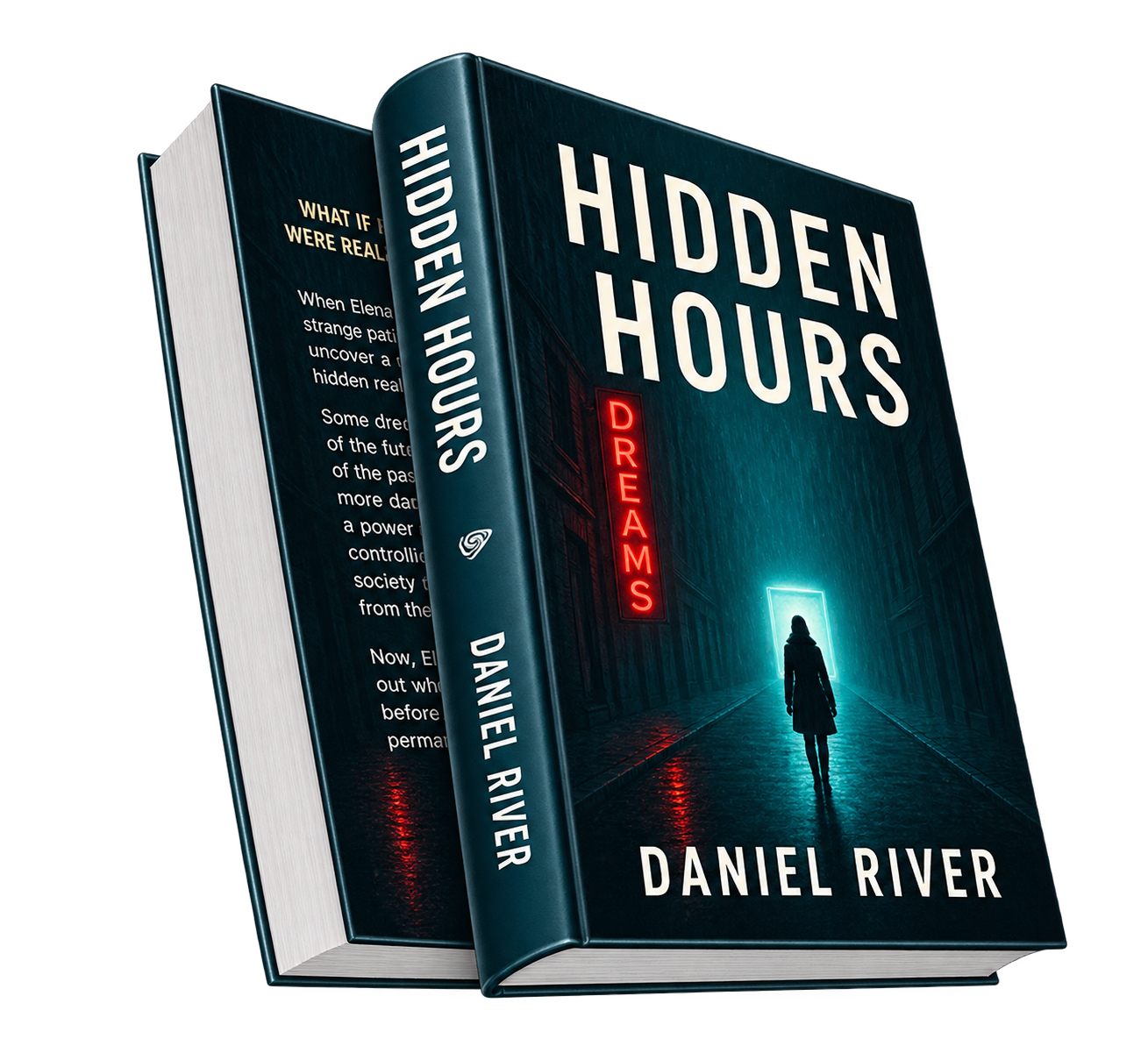
Chapter One – The Silent Death
The boy looked as though he was only sleeping.
His mother found him first, just after seven on a cool autumn morning, sunlight spilling in through the half-open blinds. The air was still, filled only with the hum of the refrigerator downstairs and the faint traffic drifting in from the highway. She called his name softly at first, then louder, pulling back the covers.
But nineteen-year-old Daniel Reyes did not stir. His body was warm, his face serene, as though he might wake at any second. Only the stillness of his chest betrayed the truth.
By the time the paramedics arrived, the mother’s screams had drawn the entire neighborhood. Neighbors crowded the porch, whispering in confusion. There was no blood, no sign of struggle, nothing but a healthy young man who had simply failed to wake.
The paramedics shook their heads, checked vitals, repeated the same tests. One of them muttered, “I don’t understand…,” before zipping the body bag.
The official report would say “sudden unexplained nocturnal death.” An anomaly. A medical fluke. Something to bury in the fine print.
But it was not the first.
Dr. Elara Quinn read the case summary on her computer screen two days later, the words blurring as her eyes drifted over the familiar pattern: Healthy. No medical history. No drugs. Died in sleep.
Her office was silent except for the hum of equipment. Screens displayed brainwave charts, REM cycle graphs, neural imaging scans. A single mug of cold coffee sat forgotten on her desk. She had been here all night, chasing data, losing hours she could never recover.
She rubbed her temples, fighting off the ache that always came when she stared too long at these cases. There had been six in the past month alone — six young, healthy men and women dead without explanation, always during REM sleep. No trauma. No neurological red flags. Just… gone.
Her phone buzzed against the desk. She ignored it, scrolling further down the autopsy notes. No cardiac abnormalities. No respiratory failure. The toxicology was clean. The coroner had written one damning word: Unexplained.
She hated that word.
“Doctor Quinn?”
Elara jumped. The voice came from the doorway. A graduate assistant, Megan, leaned inside, holding a clipboard against her chest. The girl looked nervous, hesitant. “You said you wanted the EEG updates from the overnight trials?”
“Yes,” Elara said, pushing the case file aside. She straightened, brushing a stray lock of hair behind her ear. “Bring them in.”
Megan entered, placing the clipboard on the desk. “Patient Four showed irregular REM spikes again. Like… big ones.” She chewed her lip. “Same pattern you’ve been seeing.”
Elara scanned the readouts quickly. The spikes were there — massive surges of activity during REM sleep, far beyond what should have been neurologically possible. She felt the old chill stir in her chest. It was the same pattern her brother had shown.
She didn’t let her assistant see the tremor in her hands. “Thank you, Megan. I’ll review this myself.”
Megan hesitated. “Dr. Quinn… do you ever wonder if… if maybe we shouldn’t keep running these trials? If there’s something wrong with—”
“That’ll be all,” Elara said, too sharply. She softened her voice. “I’ll handle it.”
The assistant nodded quickly and slipped out, leaving Elara alone again.
She leaned back in her chair, staring at the jagged spikes on the chart. She knew the shape of those lines too well. She had memorized them when she was twenty-two, when her brother Nathan had been found lifeless in his dorm room. The same calm expression, the same absence of explanation.
The doctors had told her unexplained.
But the truth had been written in those spikes, the same ones rising now like jagged mountains across the chart in front of her.
Something was happening inside the human brain during REM sleep — something powerful, something dangerous. And Elara Quinn intended to find out what it was.
That evening, Elara left the lab later than usual. Portland’s streets were washed with drizzle, the kind of fine mist that clung to coats and hair. She pulled her hood up and walked briskly to her car, clutching her briefcase against her side.
The rain smelled sharp, metallic.
She slid into the driver’s seat, tossed the briefcase onto the passenger side, and sat for a moment, hands gripping the wheel. Exhaustion pressed at her skull. She had been running on caffeine and adrenaline for weeks, sleeping less and less, haunted by charts, graphs, and the faces of the dead.
She closed her eyes, just for a second.
The city’s lights blurred, and when she opened them again, she wasn’t in her car anymore.
She was standing in the middle of a street.
The buildings were wrong. They were familiar — glass storefronts, neon signs, apartment towers — but they shimmered faintly, edges bending like heat waves. A billboard above her flashed advertisements that shifted with each glance: a soda brand, then a missing person’s photo, then her brother Nathan’s face.
Her heart thudded. “This isn’t real,” she whispered.
But the cold rain on her skin felt real. The ache in her chest felt real. And the footsteps echoing behind her — heavy, deliberate — were far too real.
She turned.
A man stood at the far end of the street, tall, broad-shouldered, watching her. His face was shadowed, but his stance was unmistakably military. He started walking toward her.
Her breath caught. She stumbled backward, pulse racing.
The man spoke, his voice carrying across the warped street. “Dr. Quinn.”
She froze.
He knew her name.
The man kept coming, unhurried, like someone walking toward a scheduled appointment. He passed under a streetlamp that hummed with a bee’s nest of dying light, and she took in his face: late thirties, lean, hard-cut features, eyes that carried old storms. A faded scar bit across his left eyebrow. He wore a battered field jacket and fingerless gloves as if the cold never quite left his bones.
“Dr. Quinn,” he repeated, stopping an arm’s length away. Rain threaded between them, hanging too long in the air before choosing to fall. “You weren’t supposed to cross like this.”
“Who are you?” Elara said. Her voice sounded smaller than she wanted. “Where am I?”
The neon ads overhead stuttered again—DRINK//MISSING//NATHAN QUINN, 22—then blinked out, leaving the street suddenly darker. The man’s gaze flicked upward, then back to her.
“My name is Jonas,” he said. “You’re in Somnus. And if you want to wake up again, you need to listen.”
Somnus. The word settled with a click that made no sense but felt inevitable.
“This is a dream,” she said, forcing logic across the panic. “You’re a construct. I’m having a stress episode. Microsleeps can—”
Something heavy slammed down two blocks away. Asphalt buckled, and a building folded like wet cardboard, floors pancaking into a starburst of glass. A distant roar rolled after it, low and hungry. Elara’s body reacted before her mind did—she flinched, heart launching into a sprint.
Jonas didn’t move. “Not microsleep,” he said. “Crossing. You left the door open.”
“The door?”
“Your work,” he said. “What you’ve been measuring. Those spikes? Keys turned in locks.”
“I don’t know you,” she said. “How do you know me?”
A different light flared behind him—a white, surgical glow from an alley mouth. Three silhouettes stood there for a heartbeat, long-limbed and wrong, like marionettes learning their strings. Heads tilted toward Elara in the same disquieting angle, the same slow curiosity. Their faces were blank except for mouths that hadn’t decided what shape to be.
Jonas stepped between her and them. “Walk,” he said. “Next block. Don’t look at them.”
He didn’t touch her, but his presence pulled her forward. Elara’s shoes scraped wet pavement. Shop windows reflected almost-Elara’s moving beside her—hair shorter than she wore it, a different coat, no scar at her temple—until the reflections fell out of time and lagged behind, watching.
“What are those?” she whispered.
“Nightmares pressed into service,” Jonas said. “They hunt the unfocused. Havel has better tools, but he doesn’t waste them unless he’s sure.”
“Havel?” The name was a cold finger under the ribs. Havel belonged to an article she’d read a decade ago, a wunderkind neuroscientist who’d vanished from conferences and journals and surfaced in rumor. “Dr. Marcus Havel?”
Jonas smiled without humor. “He prefers ‘Director’ here.”
A shadow passed overhead, too slow and close to be a cloud. Elara looked up and wished she hadn’t. A blimp—not quite a blimp—drifted between towers, its undercarriage bristling with lenses. The hull bore nothing but a sigil painted like a wound: a split eye, half sun, half crescent moon. The crest from her notes. The one she’d sketched in the margins of autopsy reports, thinking it a private tic of grief.
“I’ve seen that,” she said. “Why have I seen that?”
“Because you’ve been knocking for years,” Jonas said. “You just didn’t know the door opens both ways.”
They turned a corner. The street stopped being a street. The paint lines arced up a wall and kept going. A traffic light hung sideways like a stopped pendulum. The rain smelled of hot metal and cut grass and old attics. Elara’s hands were trembling now, a precise, humiliating tremor that had nothing to do with caffeine.
“What do you want?” she said. “Why am I here?”
“Because your brother died here,” Jonas said, and the world narrowed to a pinpoint. “And because if you keep digging without a guide, you’ll be next.”
Her mouth dried out. “Nathan didn’t— He— That’s not possible.”
Jonas nodded past her shoulder. “Don’t turn around,” he said. “We’re about to have company.”
Elara didn’t turn. She couldn’t. The air behind her changed temperature—the way a room changes when someone steps into it carrying rage. Her skin prickled with a warning older than language.
“Draegor,” Jonas said softly, like a man acknowledging a storm he’d learned to respect. “He’s faster than last time.”
Elara’s legs decided for her. She ran. Jonas matched her pace with a soldier’s economy, guiding her toward a door where there shouldn’t have been a door—weathered oak set into the glass flank of an office tower. He yanked the handle. It didn’t give.
“Breathe out,” he said.
“What?”
“Breathe out and want it open.”
It was ridiculous. It was insane. She breathed out and wanted.
The latch clicked.
They spilled into darkness that tasted like copper. Stairs led down and down, a spiral that didn’t quite fit the geometry of the space. Elara’s knees found a rhythm. Jonas killed the door behind them. Something hit it a heartbeat later—an impact that shook dust from the concrete and sent hairline cracks radiating like frost.
“Good,” Jonas said into the black. “You still remember how to want.”
“I don’t know you,” Elara said, breath sawing. “I don’t know this. I don’t—”
“Then wake up,” Jonas said.
Elara’s foot missed the next step. She pitched forward. The world fractured into angles and noise—
—and she was in her car.
She was in her car, seatbelt digging into her shoulder, hands locked on the wheel. A car horn bleated somewhere down the block. Rain stippled the windshield in a normal, unmagical way. Her dashboard clock read 9:18 PM. A text notification glowed on her phone: MEGAN—Call me when you see this. Urgent.
Elara blinked. Heat rushed into her face and then left again, taking stability with it. She made herself breathe. In, four beats. Out, six. The lab parking lot looked perfectly ordinary. Sodium lamps carved safe cones in the mist. Her breath fogged the glass.
She lifted her left hand to wipe at her eyes and hissed. Three shallow scratches curved across the back of her knuckles, beaded with rainwater and blood.
She stared at them. A drop slid, gathered at the wrist, fell. It pattered against the leather of her bag in a sound that didn’t sound like anything at all because none of this made sense.
Her phone buzzed again. She answered without looking.
“Megan?”
“Dr. Quinn—” Megan’s voice was too fast, pitched with the wrong kind of urgency. “Patient Four is in REM again and the amplitude is off the charts. We’ve never— I don’t want to touch anything without you here.”
“I’m in the lot,” Elara said. Her voice sounded like someone else’s—too level. “Don’t wake him. Don’t do anything.”
She cut the call, wiped her hand on a napkin that turned pink, and stepped back into the rain.
The lab’s after-hours quiet had its own soul. Vending machine hum. Fluorescent lights that flickered and then stabilized. The scent of antiseptic that never quite masked the human. Elara badged in, passed the poster-lined hallway—a timeline of sleep research telescoped into polite bullet points—and entered the monitoring room.
Megan rose from a rolling chair so fast it struck the console behind her. “His theta waves are… I don’t have language for this.”
Monitors filled the far wall, each a live window into a patient’s night. Patient Four—Thomas King, 27, no significant medical history—lay in the dim adjacent suite, electrodes crowning his scalp like a fragile laurel. His eyes moved under lids in tiny, frantic darts. The EEG trace beneath his name wasn’t a line anymore. It was a mountain range.
Elara moved closer. The numbers loved her; they leaned toward her as if they’d been waiting. She measured the amplitudes against what she knew, what she’d seen in files, in her own nightmares. Impossible. Magnificent. Terrifying.
“Time to REM?” she asked.
“Sixty-eight minutes,” Megan said. “He dropped fast.”
“Any arousals?”
“None. Dr. Quinn… there was a spike four minutes ago—like a sheet of lightning. The cardiogram stuttered. He stabilized, but… I thought he was going to—”
Elara held up a hand. Megan stopped. The only sound was the low, oceanic rush of the machines.
On the monitor, Thomas King’s mouth moved. A word formed and evaporated. His fingers flexed, then pressed against the sheet in a pattern Elara recognized without meaning to—tap, tap, pause; tap, tap, tap. A rhythm that had lived in her house when Nathan was a teenager, drummed on tabletops, steering wheels, his own thigh. A nervous code that meant thinking.
“Thomas?” Elara said into the intercom mic, keeping her tone slow and warm. “It’s Dr. Quinn. You’re safe. You’re sleeping normally.”
His heart rate nudged up, then leveled. His eyes shifted left, right. The EEG presented another impossible peak as if the brain were saying watch this.
“Do we wake him?” Megan whispered.
“No,” Elara said. “He’s not in distress.”
She didn’t add yet. She didn’t add we don’t know what waking interrupts. She watched the numbers until the numbers felt like air, and then she watched Thomas’s face. There, behind the small twitches and micro-expressions, a flicker that read like recognition. The hairs at the nape of her neck lifted.
A different screen pinged—an external feed tied to police blotters and coroner’s logs, part of Elara’s side project that wasn’t on any grant paperwork. A new entry propagated across the display with the indifferent efficiency of software.
UNIDENTIFIED FEMALE, 24—D.O.S. 21:06—FOUND DECEASED IN RESIDENCE—SUSPECTED S.U.N.D.—AUTOPSY PENDING.
Megan followed Elara’s gaze. “Another one?”
Elara nodded once. The shape of her brother’s file fluttered against the inside of her skull.
“Do you… want me to—”
“Flag it,” Elara said. “Pull what you can. Quietly.”
Megan swallowed. “Yes, Doctor.”
“Phone,” Elara added. “The number on King’s intake. Call his emergency contact. Ask about any history of night terrors or—”
“Already did,” Megan said. “No history. His girlfriend said he started talking in his sleep last week. Names. Like he was reporting to someone.”
Elara looked at the monitor. Thomas’s lips moved again. This time she read the shape. Three syllables.
Jo-nas Vale.
Her mouth tasted of pennies.
“Run a phonetic capture,” she said. “I want a clean waveform.”
Megan’s hands flew.
Elara watched Thomas breathe. Watched the numbers try to build a cathedral out of REM. The last time she’d felt this particular mix of dread and certainty she’d been twenty-two and someone had handed her a box with her brother’s watch inside.
Her phone buzzed in her pocket.
She didn’t look. She couldn’t look away from the screen.
Thomas’s body jerked once, gently, as if something had tugged his ankle. The EEG line surged and then—there was no other word—bloomed. Elara’s chest tightened. She had never seen a human brain do that. Not awake. Not asleep.
“Beautiful,” Megan breathed, forgetting to be afraid.
The intercom clicked. A sound came through that wasn’t a word at first—wind, maybe; the thin hiss of rain. Then a voice, far away and too close.
“Door,” Thomas said. “He said… door.”
Elara leaned to the mic. “Thomas, who is ‘he’?”
His brow knotted. Tears leaked from the corners of his closed eyes. His hands moved again—tap, tap, pause; tap, tap, tap.
“Elara,” he whispered.
Megan’s head snapped toward her like a puppet whose strings had been yanked. “He— He said your—”
The monitor strobed white. Every machine in the room took a breath and forgot how to exhale. Megan’s computer threw an error in a language it hadn’t been taught. The lights dimmed a fraction, enough to make the room feel like a different version of itself.
Then everything resumed. The lines reappeared. The numbers pretended nothing had happened.
Elara stood very still. The world had shifted half a degree. No one else seemed to notice but Megan and the cold place under Elara’s sternum where grief lived like a seed.
“Did we lose data?” Elara asked.
“Two seconds,” Megan said, shaking. “Like something cut through. I’ll try to reconstruct. Dr. Quinn, what was that?”
“Interference,” Elara said. The lie tasted clean. “Keep recording.”
Her phone buzzed again. She took it out this time because part of her knew the shape of the next hour and wanted to be wrong. Unknown Number. She let it vibrate once more, then answered.
“Elara Quinn.”
Static. Then a woman’s voice, clipped and professional, wearing fatigue like a uniform. “Dr. Quinn, this is Agent Sarah Kade. We need to talk about your research.”
Elara looked at Thomas King sleeping as if under orders. On the glass beyond him, the lab’s reflection showed a woman standing very straight, every line of her tuned to breaking and not yet breaking. She looked older than thirty-five. She looked like Nathan when he was trying not to worry her.
“Who gave you this number?” Elara said.
“You did,” Agent Kade said. “You just don’t remember.”
The line clicked dead.
Elara stared at her phone until the screen went black.
“Doctor?” Megan said softly. “Are you okay?”
Elara set the phone down with care, as if it might explode. She returned her eyes to the monitor because the monitor was honest in a way people rarely were, and found what she needed there: the steady heartbeat of a man inside a storm, the cathedral-line of a brain constructing something enormous, the proof that the world was larger than the names they’d given it.
“We’re fine,” she said. “We watch.”
They watched. For a long time they watched. The rain worked at the windows. Somewhere a compressor kicked on and off, faithful, oblivious.
Near midnight, Thomas’s REM cycle eased. The mountain range smoothed into foothills. His breathing deepened into the slow tide of Stage Two. He sighed—a small, unremarkable human sound—and turned his head on the pillow.
Megan exhaled like she’d been underwater. “He’s clear,” she said. “We made it through.”
“No,” Elara said, a fractional shake of her head. “We made it into.”
Megan didn’t ask what that meant. She went to make tea with hands that weren’t steady.
Elara printed the EEG, the thing itself: ink on paper, a waveform turned artifact. She held it and felt again the way the oak door’s latch had yielded under her breath. Breathe out and want it open. She put the printout in a folder with other artifacts that had no place in science and locked the drawer.
On her way out of the monitoring room, she passed the hallway bulletin board: photos from the department picnic, grant announcements, a faded flier for a mindfulness workshop. Someone had tacked a strip of paper in the corner with a hand-drawn symbol.
A split eye. Half sun. Half moon.
Elara stopped. She reached up and peeled the paper free. The pushpin left a neat wound in the cork.
She didn’t hear the footsteps yet. That would be tomorrow. She didn’t see the man leaning in the shadow of the parking structure, watching the building like men watch a place they mean to breach. That would be soon.
For tonight, the lab lights hummed, and Thomas slept, and the world continued to pretend it was only one world.
Outside, rain stitched the city together with a thousand silver threads, and somewhere in Somnus, something very patient smiled.